



If you’ve been told you have a cavity or are experiencing tooth pain, you might hear two common treatment options: a filling or a root canal. While both are used to treat damaged teeth, they address very different levels of decay. At Care Smiles Dental, we help patients understand the difference so they can feel confident about their treatment plan.
What Is a Dental Filling?
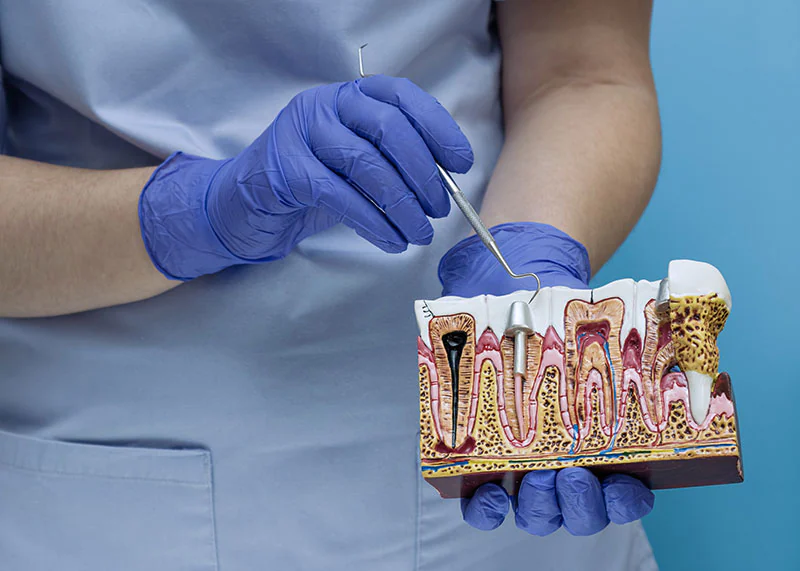 A dental filling is used to treat early to moderate tooth decay. When a cavity is caught before it reaches the inner layers of the tooth, the damaged portion can usually be removed and replaced with a filling material.
The process is relatively simple: your dentist removes the decayed area of the tooth, cleans the space, and fills it with a tooth-colored material that restores shape and function.
Dental fillings are commonly used for:
- Small to moderate cavities
- Minor chips or worn enamel
- Early decay that has not reached the nerve
Because fillings preserve most of the natural tooth structure, they are considered a conservative and highly effective treatment when decay is caught early.
What Is a Root Canal?
A root canal is needed when decay or infection reaches the inner pulp of the tooth, where the nerve and blood supply live. Once this area becomes inflamed or infected, a filling alone is no longer enough to save the tooth.
During a root canal, the infected pulp is carefully removed, the inside of the tooth is cleaned and disinfected, and the space is sealed to prevent further infection. In most cases, the tooth is then restored with a crown for added strength and protection.
Root canals are typically recommended when:
- There is deep decay reaching the tooth nerve
- You have persistent or severe tooth pain
- The tooth is sensitive to hot or cold for extended periods
- There is an infection or swelling near the tooth or gum
Key Differences Between a Filling and a Root Canal
The biggest difference comes down to how deep the damage goes.
A filling treats decay in the outer layers of the tooth (enamel and dentin), while a root canal is needed when the inner nerve is affected. In other words, fillings treat the problem early, while root canals treat more advanced infections.
Another difference is recovery and restoration. Fillings are typically completed in one visit with minimal downtime, while root canals may require additional restoration, such as a crown, to fully protect the tooth after treatment.
Can a Tooth Need Either One?
In some cases, a tooth may start out needing a filling but later progress to requiring a root canal if decay spreads deeper. This is why early treatment is so important – addressing cavities promptly can often prevent the need for more complex procedures later on.
How Do I Know Which One I Need?
It’s not always easy to tell on your own. Some cavities don’t cause pain at all, while others may cause sharp or lingering sensitivity. Tooth pain, swelling, or prolonged sensitivity are often signs that the issue may have reached the nerve, but completing a proper dental exam with X-rays is the only way to know for sure.
At Care Smiles Dental, we carefully evaluate the extent of decay and walk you through your options so you understand exactly what’s happening and why a specific treatment is recommended.
Root Canals and Fillings: The Bottom Line
Fillings and root canals both aim to save your natural tooth, but they do so at different stages of decay. Fillings address problems early, while root canals treat more advanced infections to prevent tooth loss.
If you’re experiencing tooth pain or suspect a cavity, the best next step is an evaluation. Contact Care Smiles Dental to schedule an appointment and get clear answers about your oral health – and the ideal treatment for your smile.


